6 August 2026 · 5 min read
Renew the COE or Buy a New Lorry? How to Work It Out
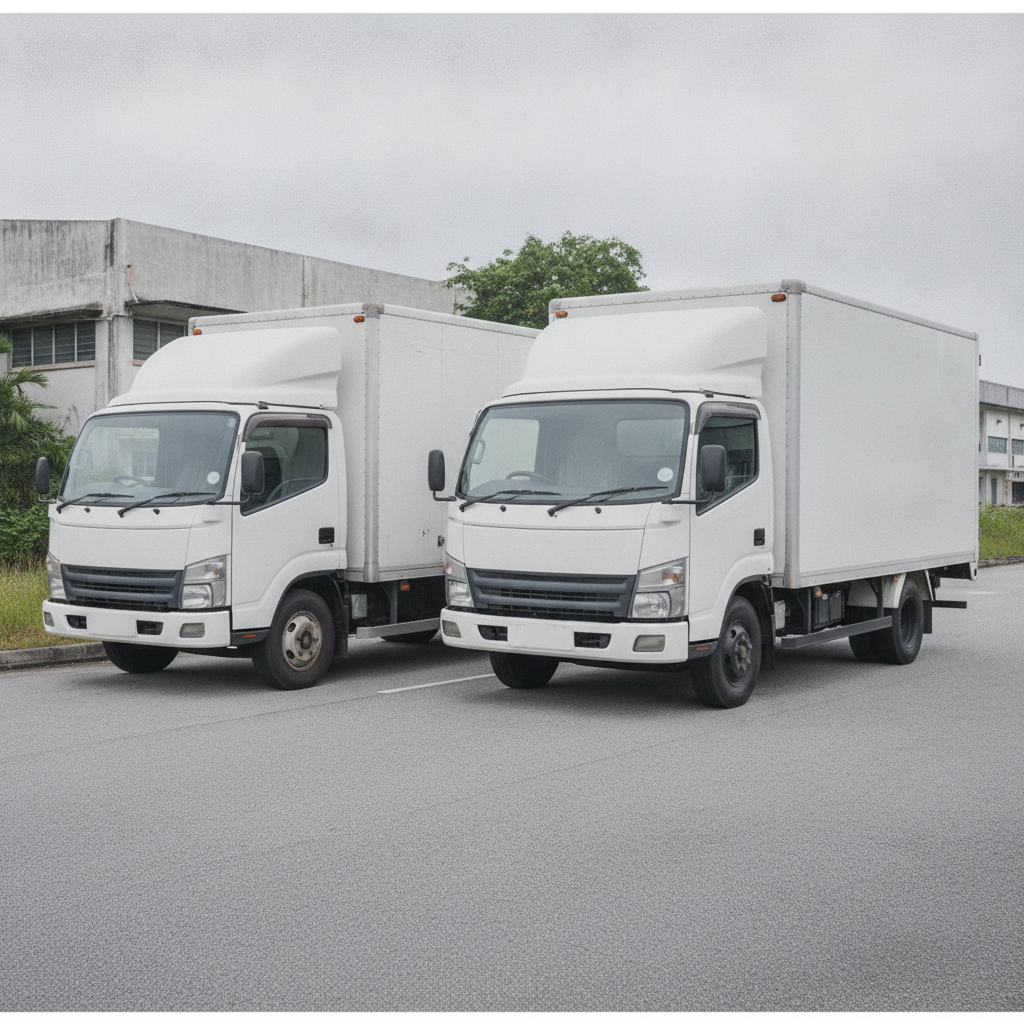
Your lorry is coming up to ten years. Renew, or change vehicle?
Most people compare the wrong two numbers — the renewal price against the price of something new — and then wonder why the decision still feels uncertain.
Ask a dealer and you should expect a nudge towards replacing. We earn more when you buy a vehicle than when you renew one, and you should read anything we say with that in mind. So here is the arithmetic instead, and you can run it yourself.
First: can it even be renewed?
A goods vehicle in Singapore has a statutory lifespan of 20 years. That sets the ceiling on the question before any money is discussed.
At ten years, both doors are open. At fifteen, a 5-year renewal takes it to the end of its permitted life and there is no third option after that. A vehicle nearer the ceiling is worth less as a renewal, whatever the PQP happens to be.
The number most people miss
Before you renew, deregistering the vehicle can return part of the COE you originally paid.
Once you renew, that is gone. A renewed COE has no rebate value — keep the vehicle five years or five months, there is nothing to come back.
So renewing is not only the PQP. It is the PQP plus the rebate you are choosing to give up. That second half is invisible on any quote, and it is often the figure that settles the decision.
What to put on each side
Two columns, same number of years, and be honest in both.
- Renewing
- The PQP for your category and term, plus the rebate you forgo, plus what the next few years of repairs will realistically cost on a vehicle that age. That last figure is the one people flatter — look at what you have actually spent in the past two years, not what you hope to spend.
- Replacing
- The price of the newer vehicle including its COE, minus whatever you get for the old one, plus the cost of the changeover — the days it is off the road, and the paperwork.
- Both sides, every year
- Road tax, insurance, servicing and fuel or charging. A newer vehicle is often cheaper here, and that gap compounds over the years you keep it. Do not let it sit outside the comparison.
The rule of thumb, and where it breaks
As a starting point: if the PQP plus your expected repairs approaches the cost of a newer vehicle with a fresh 10-year COE, replacing usually wins.
Where that breaks is when the vehicle is genuinely sound and doing modest work. A well-kept lorry on light duty can be the cheapest thing you own. Renewing it is an easy decision — one a spreadsheet gets wrong if the repair figure is inflated.
It also breaks the other way. If it has been in the workshop twice this year, the repairs column is not a forecast — it is a pattern.
The part that is not arithmetic
How long do you actually intend to keep working the vehicle? That answer changes everything above and no calculator knows it.
Five more years and out, on modest mileage, points to renewal. Ten more years of daily hard use points to replacing. Uncertain points to the 5-year renewal, because for a goods vehicle it keeps the decision open at half the cost.
Common questions
My van COE is ending in Singapore. Should I renew or change vehicle?
Work both paths. Add this month's PQP to likely repairs. Compare that with a newer van or lorry plus a new 10-year COE. A goods vehicle can take a 5-year renewal and decide again later, up to 20 years. Legion runs both numbers for your plate. LTA OneMotoring has the official rules.
Who can help when my van COE is ending?
LTA sets the rules and takes the renewal. Legion Motors works out renew versus replace, the PQP, and the paperwork. WhatsApp Kimi your number plate. She uses this month's figure. We do not print a PQP on this page because it moves.
Check it yourself
The official sources for everything above. Rules change — these are the pages that will be right when this one has gone stale.
- COE renewal figures and calculator
This month's PQP and the monthly instalment for 5 years against 10.
- One-stop ownership help
COE, road tax, insurance, and WhatsApp after you buy.
- How much does it cost to renew COE for a lorry?
How the PQP is worked out, and what a goods vehicle can do that a car cannot.
- Current vans and lorries
What replacing would actually cost, with COE included in the price.
- LTA OneMotoring
Check your own vehicle's dates and rebate position on the official site.
Send Kimi your number plate on WhatsApp and she will run both columns for your actual vehicle — this month's PQP, the rebate you would give up, and what the equivalent newer vehicle costs today. If renewing is the better answer, she will say so.
Message Kimi on WhatsApp